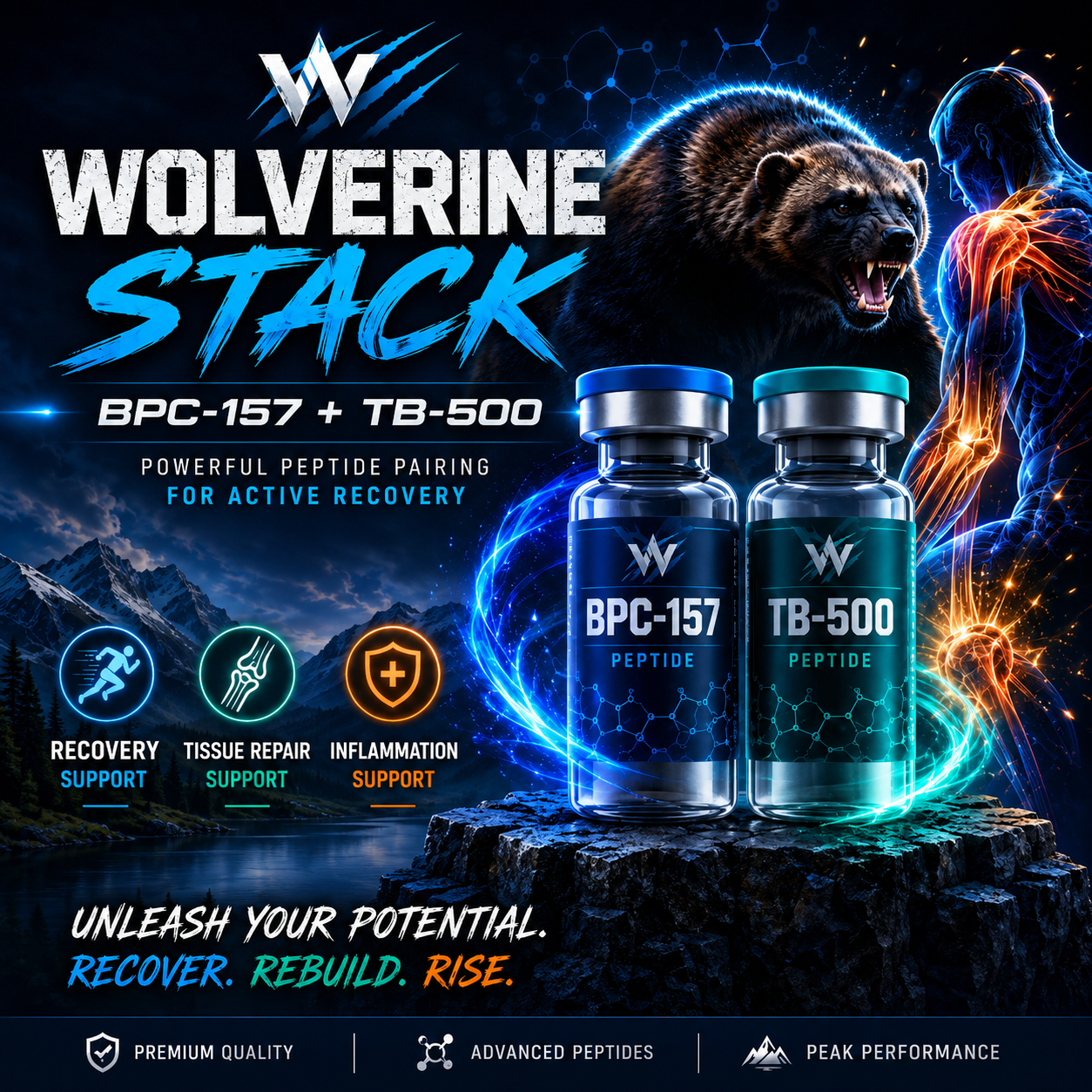
Introduction to the Wolverine Stack
The Wolverine stack is a term used in performance, recovery, and biohacking circles to describe a combination of peptides—most notably BPC-157 (Body Protection Compound-157) and TB-500 (a synthetic analog of the natural protein fragment thymosin beta 4). These peptides are claimed to support tissue regeneration, reduce inflammation, speed up recovery of muscles, tendons, ligaments, and soft tissues, and sometimes even serve as alternatives to surgery when healing is stalled.
While the name “Wolverine” evokes resilience, rapid healing, and strength—like the comic book character who regenerates rapidly—it’s important to understand what is known and what remains speculative.
Key Components of the Wolverine Stack
- BPC-157: A pentadecapeptide (15 amino acids) sometimes called body protection compound 157. It is derived from a protein in the stomach and is purported to help healing of various tissues, including muscles, tendons, ligaments, cartilage, and even the gut. It exists in both injectable and capsule (oral) forms in experimental or underground usage. Preclinical studies indicate that BPC-157 promotes the healing of skin, mucosa, cornea, muscle, tendon, ligament, and bone in animal models. [1]
- TB-500: A synthetic version of thymosin beta 4, which in the body plays a role in cell migration, angiogenesis, and tissue repair. It is often included in the Wolverine stack alongside BPC-157 to provide more systemic support for tissue regeneration, particularly where multiple structures (muscles tendons ligaments) are damaged.
Thus the phrase “157 and tb 500”, “bpc 157 and tb”, or “wolverine stack” refers to using both peptides together to try to cover both localized and systemic healing.